The Ditch That Reordered the World: How the Panama Canal Became a Progressive Era Epic
By Library of History Editorial Staff
In August 1914, as Europe descended into world war, a steamship named SS Ancon made a voyage that looked modest on paper and revolutionary on a map. It crossed from the Atlantic to the Pacific through a new American-built waterway in Panama, shaving thousands of miles from routes that had once wrapped around Cape Horn. In an era obsessed with speed, expertise, and the belief that public institutions could solve previously impossible problems, the opening of the Panama Canal was not merely an engineering milestone. It was a declaration that geography itself could be edited.
The canal had consumed presidents, bankrupted investors, and buried workers by the thousands before the United States finished it. French attempts in the 1880s, led by Ferdinand de Lesseps, collapsed amid tropical disease, landslides, and one of the great financial scandals of the nineteenth century. When Americans took over the zone in 1904, they inherited abandoned machinery, half-cut trenches, and a cautionary tale written in mud and fever. They also inherited a question at the center of Progressive Era politics: could an energetic modern state coordinate science, labor, medicine, and engineering at continental scale?
Over ten years, the answer emerged in concrete lock walls, dynamited hillsides, and mosquito-control campaigns that changed public health history. The Panama Canal was never an inevitable triumph. It was a fragile, costly, often brutal undertaking that succeeded because administrators transformed how government projects were organized, how disease was fought, and how a superpower imagined its global role. It sits at the heart of the Progressive Era because it fused moral confidence with administrative force, and because it revealed the price of both.
From French Catastrophe to American Opportunity
The dream of a trans-isthmian passage long predated the United States, but nineteenth-century industrial shipping turned fantasy into strategic urgency. By the 1880s, de Lesseps, fresh from success at Suez, convinced investors that Panama could be conquered with similar methods: a sea-level canal, minimal locks, and the same faith in speed that had dazzled Europe. Panama was not Egypt. Monsoon rains destabilized excavation walls. Tropical rivers swelled unpredictably. Most importantly, yellow fever and malaria ravaged labor crews. French construction companies burned through capital while mortality climbed, and by 1889 the enterprise collapsed into liquidation and scandal.
American policymakers studied that failure closely. The canal debate in Washington at the turn of the century revolved around two routes, Nicaragua and Panama, and two visions of statecraft. One camp wanted caution and private-led incrementalism. Another, ascendant under Theodore Roosevelt, treated canal construction as a test of national vitality. Congress passed the Spooner Act in 1902, authorizing purchase of French assets and negotiations with Colombia, which then controlled Panama. When treaty talks with Bogotá stalled, events moved with extraordinary speed: Panamanian separatists declared independence in November 1903, the United States supported the break, and a new treaty gave Washington sweeping rights in a canal zone across the isthmus.
The diplomacy has remained controversial for more than a century. Even contemporaries understood that the canal's legal foundations were entangled with coercive power. Yet once the Canal Zone was secured, the argument in Washington shifted from legitimacy to execution. A project that had ruined French capital now became a federal proving ground. Roosevelt, impatient with delay, visited Panama in 1906, the first sitting U.S. president to leave the country, and staged the visit as a performance of executive energy. In Progressive Era terms, symbolism mattered: governance was not supposed to drift. It was supposed to build.
Conquering the Mosquito Before Conquering the Mountain
Early American leadership repeated some French mistakes. Chief engineer John Findley Wallace resigned in frustration in 1905, complaining about bureaucracy, supply failures, and chaotic command. But the most consequential change came not from excavation plans but from medicine. Army physician William C. Gorgas, drawing on recent research linking mosquitoes to yellow fever and malaria transmission, argued that any construction schedule would fail unless disease ecology was targeted first.
Gorgas's teams drained standing water, oiled breeding pools, installed window screens, fumigated buildings, and imposed sanitation inspections with military regularity. Houses in canal towns were screened. Water systems were modernized. Quarantine rules, unpopular but strict, were enforced. The result was dramatic: yellow fever transmission was eliminated in the Canal Zone within a few years, and malaria mortality dropped sharply as anti-mosquito measures expanded. The canal was cut with steam shovels and dynamite, but it was made possible by epidemiology and public administration.
That sequence, medicine before excavation, marks one of the defining intellectual moves of the Progressive Era. Reformers increasingly believed social and biological environments could be redesigned through expert intervention. In Panama, this belief produced both real achievements and rigid hierarchies. American officials celebrated sanitation as civilizational uplift, while the labor system remained stratified by race and nationality. U.S. citizens and many European workers occupied the "gold roll" with higher pay and better housing; most Caribbean laborers occupied the "silver roll," with lower wages and harsher conditions. Thousands of West Indian workers, especially from Barbados and Jamaica, performed dangerous excavation labor that made the canal physically possible.
The human ledger of canal building cannot be reduced to a single number, but it includes substantial loss. French-era deaths were catastrophic. Under U.S. administration, health improvements reduced mortality significantly, yet accidents, disease, and overwork still killed many laborers. Progressive governance in Panama demonstrated that state capacity could save lives and reorder infrastructure; it also demonstrated that this capacity often operated inside imperial and racialized systems that allocated risk unevenly.
Locks, Landslides, and the Discipline of Scale
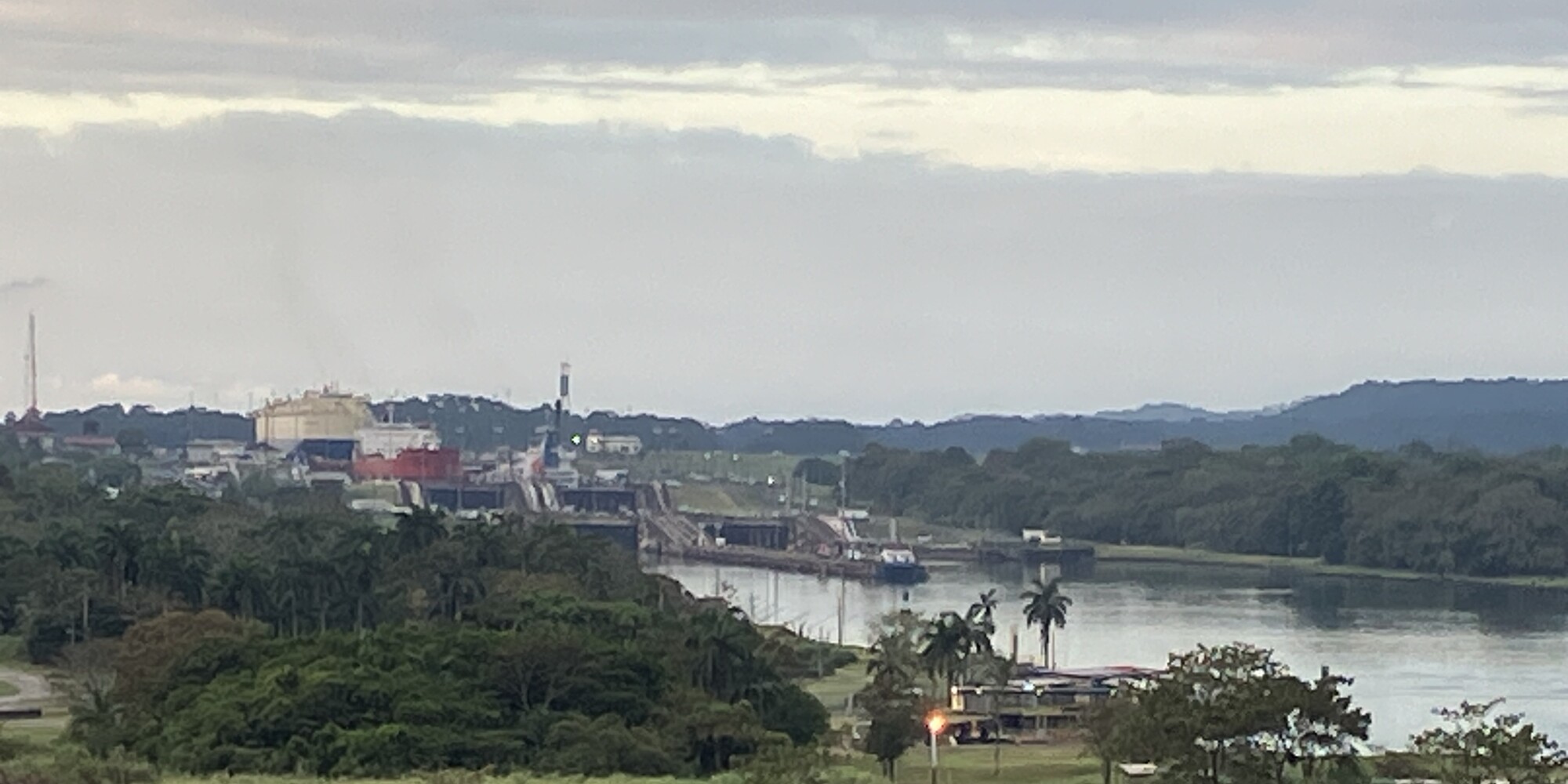
After prolonged debate, American planners abandoned the sea-level concept and chose a lock canal. This decision was both practical and visionary. Instead of slicing the isthmus down to sea level, engineers would build a chain of locks to lift ships to an artificial inland lake, Gatun Lake, then lower them on the Pacific side. The lock design reduced excavation volume and offered better control over rainfall-heavy hydrology. It also demanded gigantic concrete chambers, precision gate mechanisms, and synchronized water management unprecedented in scale.
In 1907, Army engineer George W. Goethals took command and imposed the administrative clarity earlier efforts lacked. He centralized authority, streamlined procurement, and paired military discipline with industrial logistics. At Culebra Cut (later Gaillard Cut), workers blasted through continental divide rock that seemed to move as soon as it was removed. Landslides repeatedly buried tracks and equipment. Every advance invited another collapse. Excavation totals climbed into the hundreds of millions of cubic yards, and spoil trains ran like circulatory systems through the zone, carrying earth away so excavation could continue.
Technological might was visible everywhere: Bucyrus steam shovels biting into hillsides, giant cranes setting lock-gate components, concrete pours measured with obsessive regularity. Yet the canal remained precarious until the end. Heavy rains destabilized slopes. Machinery failed in heat and humidity. Coordinating labor camps, food distribution, rail transport, and medical services required constant improvisation. The mythology of inevitable American efficiency obscures how close parts of the project came to paralysis at multiple moments.
Still, by 1913 the lock structures stood, Gatun Dam had created one of the world's largest artificial lakes of its time, and trial transits suggested the system worked. On August 15, 1914, the Ancon made the first official passage. International attention was muted by war in Europe, but strategic implications were immediate. The canal shortened routes between U.S. coasts, altered naval planning, and shifted the economics of hemispheric trade. It gave Washington a mobility advantage that would matter in both world wars and in the projection of twentieth-century American power.
The Canal's Progressive Legacy
The Progressive Era produced many reforms in city halls, state capitols, and federal commissions, but few projects so completely embodied its central convictions. Canal construction joined expert knowledge to executive ambition. It validated bureaucratic specialization: sanitary engineers, railroad planners, hydrologists, and administrators all became essential to state success. It showed that federal government could execute a decade-long megaproject that private capital alone had failed to complete. In that sense, Panama became a template for later American undertakings from New Deal dams to wartime mobilization.
Yet the canal also exposed Progressive contradictions that modern readers should not ignore. Administrative confidence often shaded into paternalism. Imperial control over the Canal Zone rested on unequal sovereignty that Panamanians contested for generations. Labor segmentation by race and nationality contradicted Progressive rhetoric about social improvement. Even the triumphal language of "making the dirt fly" left little room for workers whose names rarely entered official commemorations.
Those tensions did not erase the canal's achievement; they defined it. The waterway stands as an artifact of a period that believed technical mastery could produce historical acceleration. It did accelerate history. Oceans that had once kept fleets and markets apart were now connected by lock gates and schedules. American influence in the Caribbean and Pacific became more immediate. Global shipping patterns rewired around a new choke point under U.S. control.
Conclusion
The Panama Canal was not simply a shortcut between seas. It was the Progressive Era written in earthworks: faith in expertise, expansion of federal capacity, confidence in planning, and indifference to inequalities built into the system. Its opening in 1914 arrived at the threshold of modern catastrophe, just as the First World War began transforming the international order. In that moment, the canal symbolized both promise and warning. It proved that modern states could solve problems once dismissed as impossible. It also showed that the power to solve such problems rarely arrives without hierarchy, coercion, and unintended consequence. More than a century later, ships still pass through its chambers, and each transit repeats the same historical truth: infrastructure is never just engineering. It is a map of what a society values, and who it asks to pay the cost.