First Peoples Arrive
Migrants cross the Bering land bridge from Asia into North America.
Poverty Point
One of North America's earliest complex civilizations flourishes in present-day Louisiana.
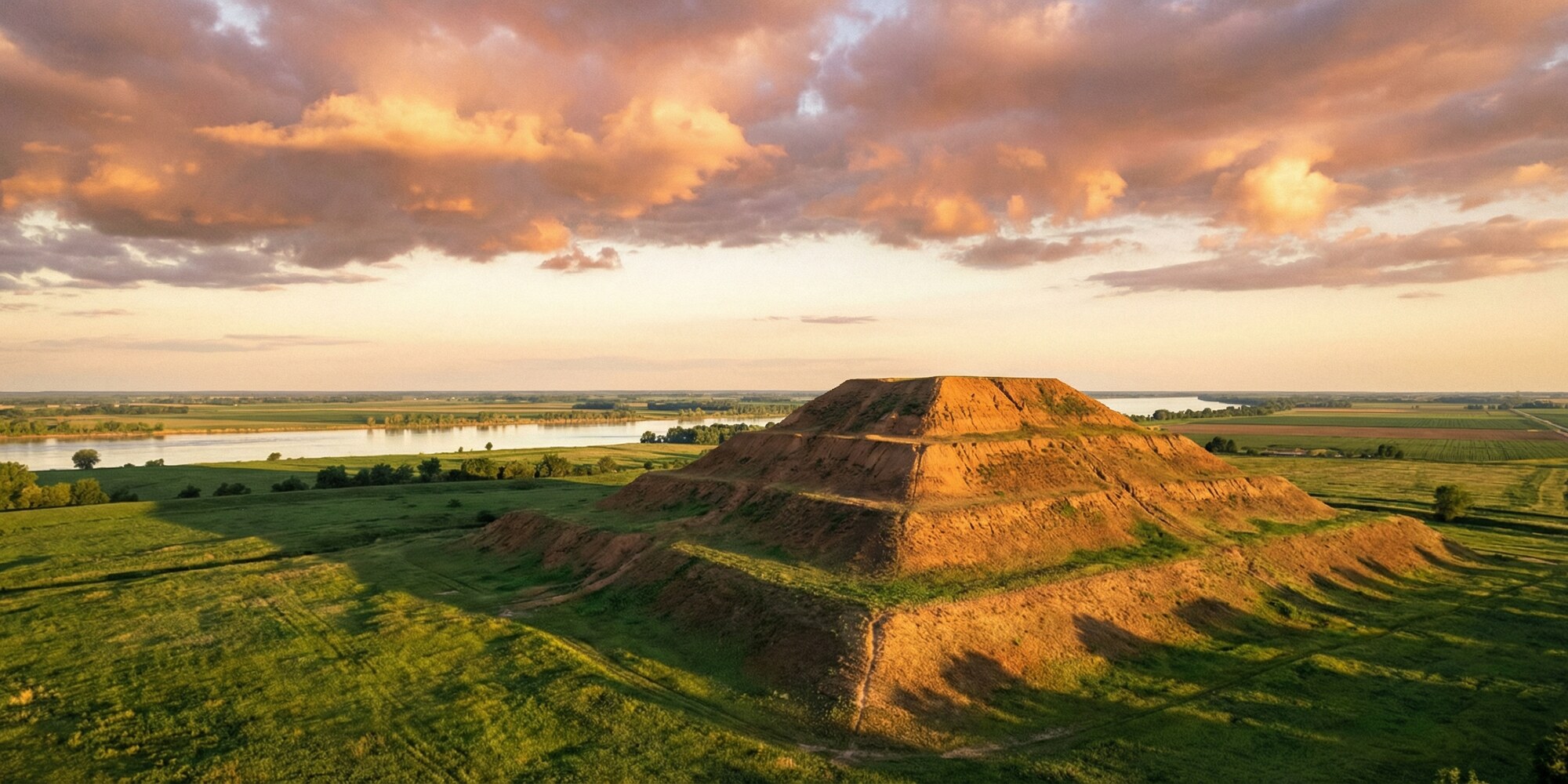
Cahokia Rises
The largest pre-Columbian city north of Mexico, with a population rivaling contemporary London.
Norse Reach Vinland
Leif Erikson and Norse explorers establish a brief settlement in Newfoundland.
Columbus Reaches the Americas
Christopher Columbus's voyage launches the Columbian Exchange and European colonization.
Ponce de León in Florida
Spanish explorer becomes the first known European to reach the Florida peninsula.
De Soto Expedition
Hernando de Soto leads a brutal expedition through the American Southeast.
St. Augustine Founded
Spain establishes the oldest continuously occupied European settlement in the US.
Roanoke Colony
England's first attempt at colonization ends in the mystery of the "Lost Colony."

Jamestown Founded
England's first permanent settlement in America barely survives its early years.
First Enslaved Africans Arrive
A Dutch ship brings enslaved Africans to Virginia, beginning centuries of American slavery.
Pilgrims Land at Plymouth
Separatists seeking religious freedom establish Plymouth Colony.
Harvard College Founded
The first institution of higher education in British America.
Bacon's Rebellion
An uprising in Virginia that foreshadows class and racial tensions.
Salem Witch Trials
Mass hysteria leads to the execution of twenty people in Massachusetts.
Zenger Trial
John Peter Zenger's acquittal establishes a precedent for freedom of the press.
French and Indian War Begins
The conflict that will reshape North America's colonial map.
Treaty of Paris
France cedes nearly all its North American territory to Britain.
Stamp Act
Parliament's direct tax on the colonies ignites the cry "no taxation without representation."
Boston Massacre
British soldiers fire on colonists, killing five and inflaming anti-British sentiment.
Boston Tea Party
Colonists dump 342 chests of British tea into Boston Harbor.
Lexington and Concord
The "shot heard round the world" begins the American Revolution.
Declaration of Independence
The Continental Congress declares independence from Britain.
Battle of Saratoga
American victory convinces France to enter the war as an ally.
French Alliance
France formally allies with the United States.
Siege of Yorktown
Cornwallis surrenders, effectively ending the Revolutionary War.
Constitutional Convention
Delegates in Philadelphia draft the United States Constitution.
Constitution Ratified
The required nine states ratify the Constitution.
Washington Inaugurated
George Washington becomes the first President of the United States.
Bill of Rights Ratified
The first ten amendments guarantee fundamental individual rights.
Neutrality Proclamation
Washington declares American neutrality in European conflicts.
Peaceful Transfer of Power
Adams concedes to Jefferson in the first contested presidential transition.
Louisiana Purchase
Jefferson doubles the nation's size with a purchase from France for $15 million.
Marbury v. Madison
The Supreme Court establishes the principle of judicial review.
Lewis and Clark Depart
The Corps of Discovery sets out to explore the western territory.
Embargo Act
Jefferson's trade embargo attempts to avoid entanglement in European wars.
War of 1812
The young republic goes to war with Britain over maritime rights and western expansion.
British Burn Washington
British forces capture and burn the capital, including the White House.
Missouri Compromise
Congress attempts to balance slave and free states.
Jackson Elected
Andrew Jackson's populist victory transforms American democracy.
Indian Removal Act
Congress authorizes the forced relocation of Native nations from the Southeast.
Nat Turner's Rebellion
An enslaved man leads the most significant slave uprising in American history.
Battle of the Alamo
Texan defenders are overwhelmed by Mexican forces at the Alamo mission.
Texas Independence
Texas declares independence from Mexico and establishes its own republic.
Trail of Tears
The Cherokee Nation is forcibly marched west, with thousands dying along the way.
Texas Annexed
The Republic of Texas is admitted as the 28th state.
Mexican-American War
War with Mexico begins, driven by territorial ambitions.
Gold Discovered at Sutter's Mill
The California Gold Rush draws hundreds of thousands westward.
Compromise of 1850
A package of bills temporarily defuses the slavery crisis.
Uncle Tom's Cabin Published
Harriet Beecher Stowe's novel galvanizes Northern anti-slavery sentiment.
Dred Scott Decision
The Supreme Court rules that Black Americans have no constitutional rights.
John Brown's Raid
Brown's raid on Harpers Ferry electrifies the nation.
Lincoln Elected
Abraham Lincoln wins the presidency and Southern states begin seceding.
Fort Sumter
Confederate forces fire on Fort Sumter, starting the Civil War.
Battle of Antietam
The bloodiest single day in American history, with over 22,000 casualties.
Emancipation Proclamation
Lincoln declares enslaved people in rebel states "forever free."
Battle of Gettysburg
The war's turning point, with 51,000 casualties over three days.
Siege of Vicksburg
Grant's victory splits the Confederacy and gives the Union control of the Mississippi.
Lee Surrenders at Appomattox
The Civil War effectively ends after four years of carnage.
Lincoln Assassinated
John Wilkes Booth kills Lincoln at Ford's Theatre.
13th Amendment
Slavery is abolished throughout the United States.
14th Amendment
Equal protection and due process are guaranteed to all citizens.
15th Amendment
The right to vote cannot be denied based on race.
Compromise Ends Reconstruction
Federal troops withdraw from the South, ending Reconstruction.
Great Railroad Strike
The first major national labor strike paralyzes the rail system.
Chinese Exclusion Act
The first federal law restricting immigration based on nationality.
Haymarket Affair
A bombing at a labor rally in Chicago leads to a crackdown on organized labor.
Statue of Liberty Dedicated
France's gift to America is unveiled in New York Harbor.
Oklahoma Land Rush
Thousands race to claim land in the former Indian Territory.
Wounded Knee Massacre
U.S. troops kill over 250 Lakota men, women, and children.
Sherman Antitrust Act
Congress passes the first federal law against monopolies.
Ellis Island Opens
The nation's busiest immigration station begins processing millions of arrivals.
World's Columbian Exposition
Chicago's world's fair showcases American industrial achievement.
Plessy v. Ferguson
The Supreme Court upholds "separate but equal" racial segregation.
Spanish-American War
America defeats Spain and acquires Puerto Rico, Guam, and the Philippines.
Roosevelt Becomes President
Theodore Roosevelt takes office after McKinley's assassination.
Pure Food and Drug Act
Federal regulation of food and medicine begins after muckraking exposés.
NAACP Founded
The National Association for the Advancement of Colored People is established.
Titanic Sinks
The "unsinkable" ocean liner strikes an iceberg, killing over 1,500 passengers.
Federal Reserve Created
Congress establishes the central banking system.
Panama Canal Opens
The engineering marvel connecting the Atlantic and Pacific opens to traffic.
U.S. Enters World War I
America joins the Allied Powers after unrestricted submarine warfare.
Armistice Day
Fighting ends on the Western Front on November 11.
Spanish Flu Pandemic
The deadliest pandemic in modern history kills millions worldwide.
18th Amendment
Prohibition of alcohol becomes law.
19th Amendment
Women win the right to vote nationwide.
Prohibition Begins
The manufacture and sale of alcohol becomes illegal across the United States.
Tulsa Race Massacre
White mobs destroy the prosperous Black neighborhood of Greenwood.
Scopes Trial
A Tennessee teacher is tried for teaching evolution, captivating the nation.
Lindbergh Crosses the Atlantic
Charles Lindbergh completes the first solo nonstop transatlantic flight.
Black Tuesday
The stock market crashes, triggering the Great Depression.
Bonus Army
WWI veterans march on Washington demanding early payment of bonuses.
FDR Elected
Franklin Roosevelt wins the presidency in a landslide.
New Deal Begins
Roosevelt launches sweeping programs to combat the Depression.
Prohibition Repealed
The 21st Amendment ends the "noble experiment."
Social Security Act
FDR signs the law creating the American social safety net.
Hindenburg Disaster
The German airship explodes at Lakehurst, New Jersey, in a live radio broadcast.
World War II Begins in Europe
Germany invades Poland, beginning the Second World War.
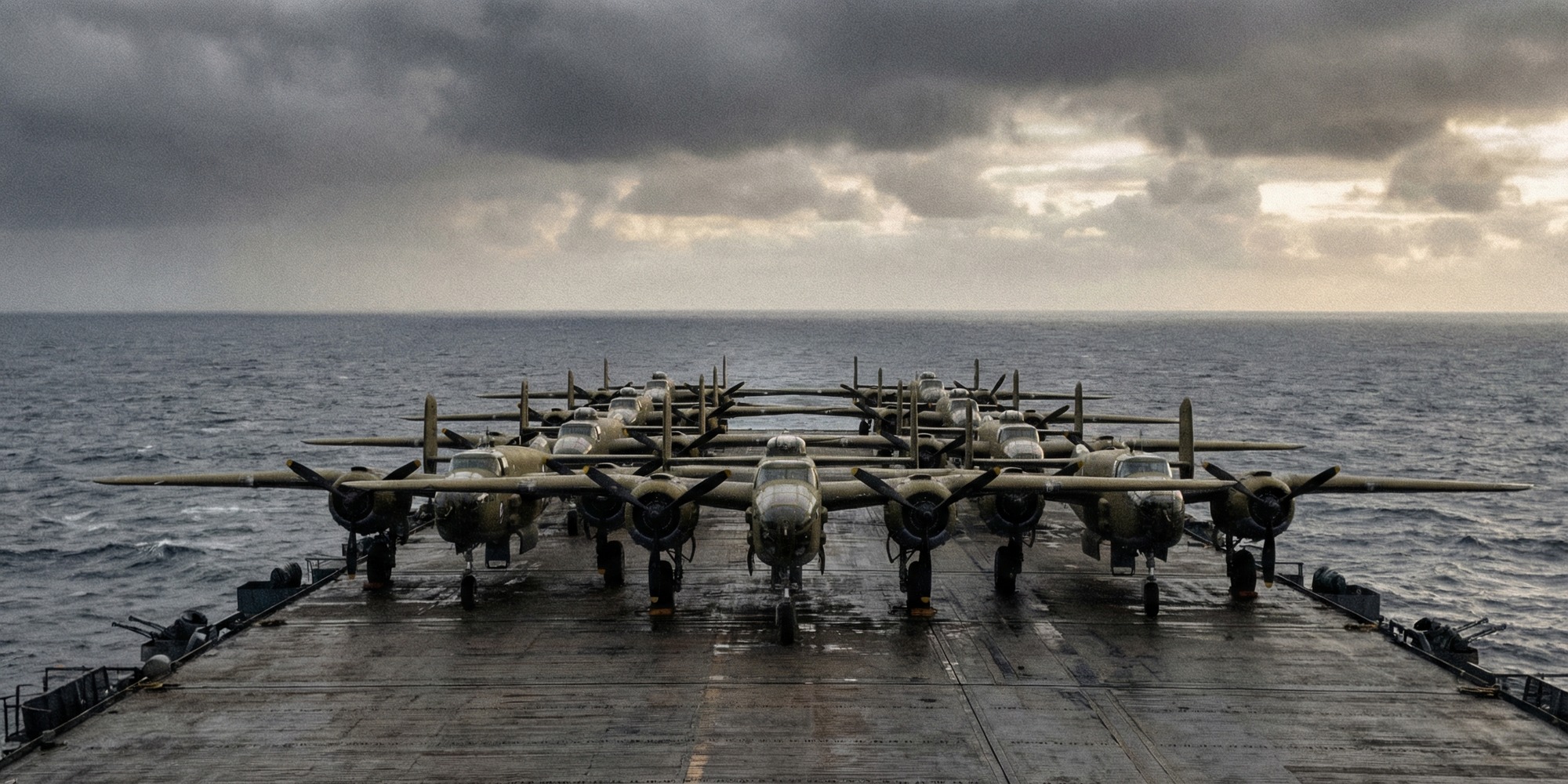
Germany Invades Poland
World War II begins as Nazi forces sweep across Europe.
Fall of France
France surrenders to Germany; Britain stands alone.
Pearl Harbor
Japan attacks the U.S. naval base at Pearl Harbor, bringing America into the war.
Battle of Midway
A decisive American naval victory turns the tide in the Pacific.
Executive Order 9066
Over 120,000 Japanese Americans are forcibly relocated to internment camps.
Italian Campaign
Allied forces invade Sicily and begin the liberation of Italy.
D-Day
Allied forces storm the beaches of Normandy in the largest amphibious invasion in history.
GI Bill Signed
The Servicemen's Readjustment Act provides veterans with education and housing benefits.
Battle of Iwo Jima
Marines capture the strategically vital island after fierce fighting.
FDR Dies
President Roosevelt dies in office; Harry Truman becomes president.
VE Day
Nazi Germany surrenders unconditionally on May 8.
Hiroshima and Nagasaki
The United States drops atomic bombs on two Japanese cities.
VJ Day
Japan surrenders on September 2, ending World War II.
United Nations Chartered
Fifty nations sign the UN Charter in San Francisco.
Truman Doctrine
The U.S. commits to containing Soviet expansion worldwide.
Marshall Plan
America funds the reconstruction of war-devastated Europe.
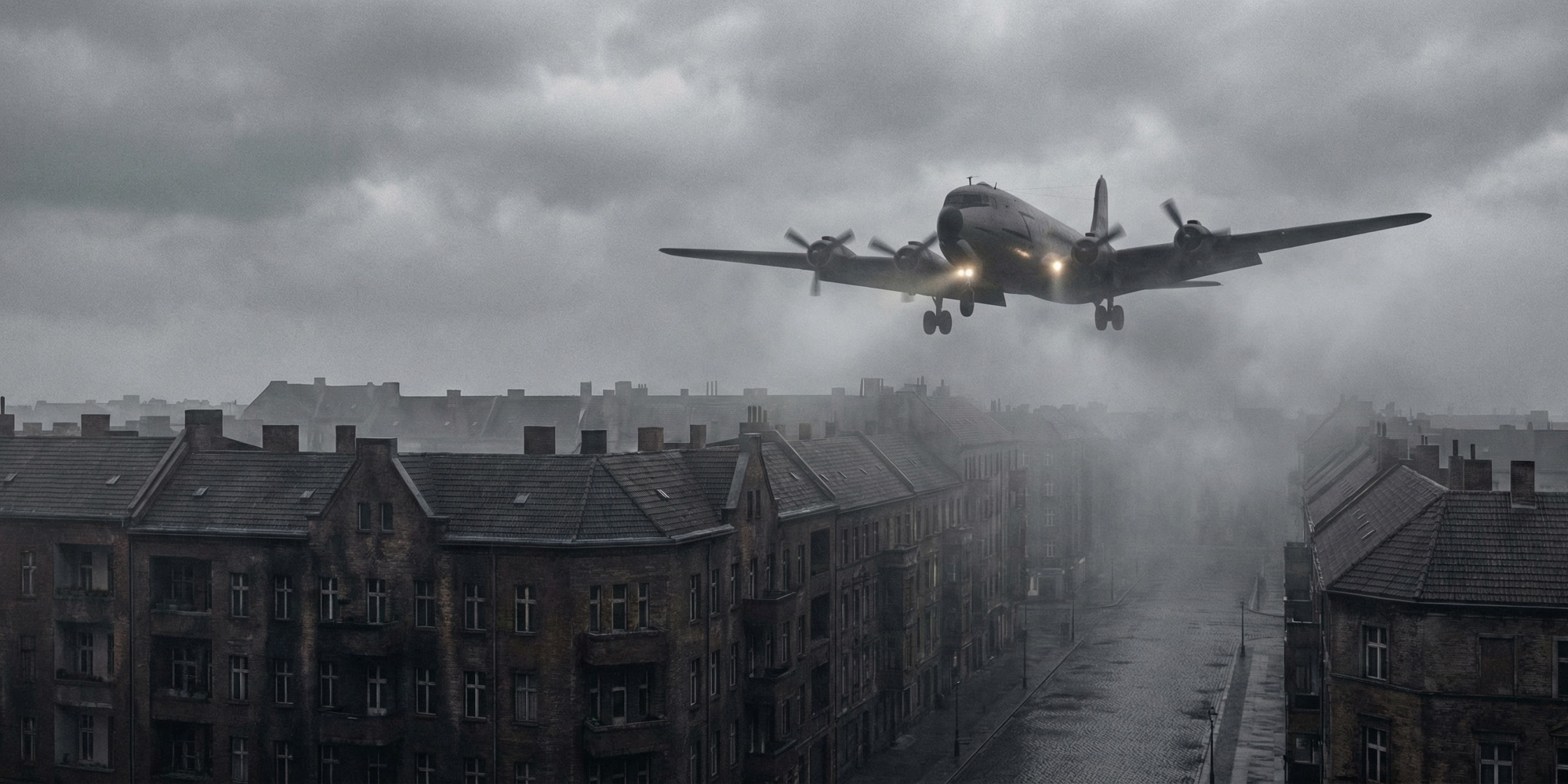
Berlin Airlift
Western Allies supply blockaded West Berlin by air for eleven months.
Korean War Begins
North Korea invades the South; the U.S. leads a UN coalition response.
McCarthy Hearings
Senator McCarthy's anti-communist crusade collapses during televised hearings.
Brown v. Board of Education
The Supreme Court declares school segregation unconstitutional.
Sputnik
The Soviet Union launches the first artificial satellite, igniting the Space Race.
Little Rock Nine
Federal troops escort nine Black students into Central High School in Arkansas.
Bay of Pigs
A CIA-backed invasion of Cuba fails disastrously.
Berlin Wall
East Germany constructs a wall dividing Berlin.
Cuban Missile Crisis
The world stands on the brink of nuclear war for thirteen days.
JFK Assassinated
President Kennedy is shot in Dallas on November 22.
Civil Rights Act
Landmark legislation outlaws discrimination based on race, color, religion, sex, or national origin.
Gulf of Tonkin Resolution
Congress gives President Johnson broad authority to escalate in Vietnam.
Brown v. Board of Education
The Supreme Court rules segregated schools unconstitutional.
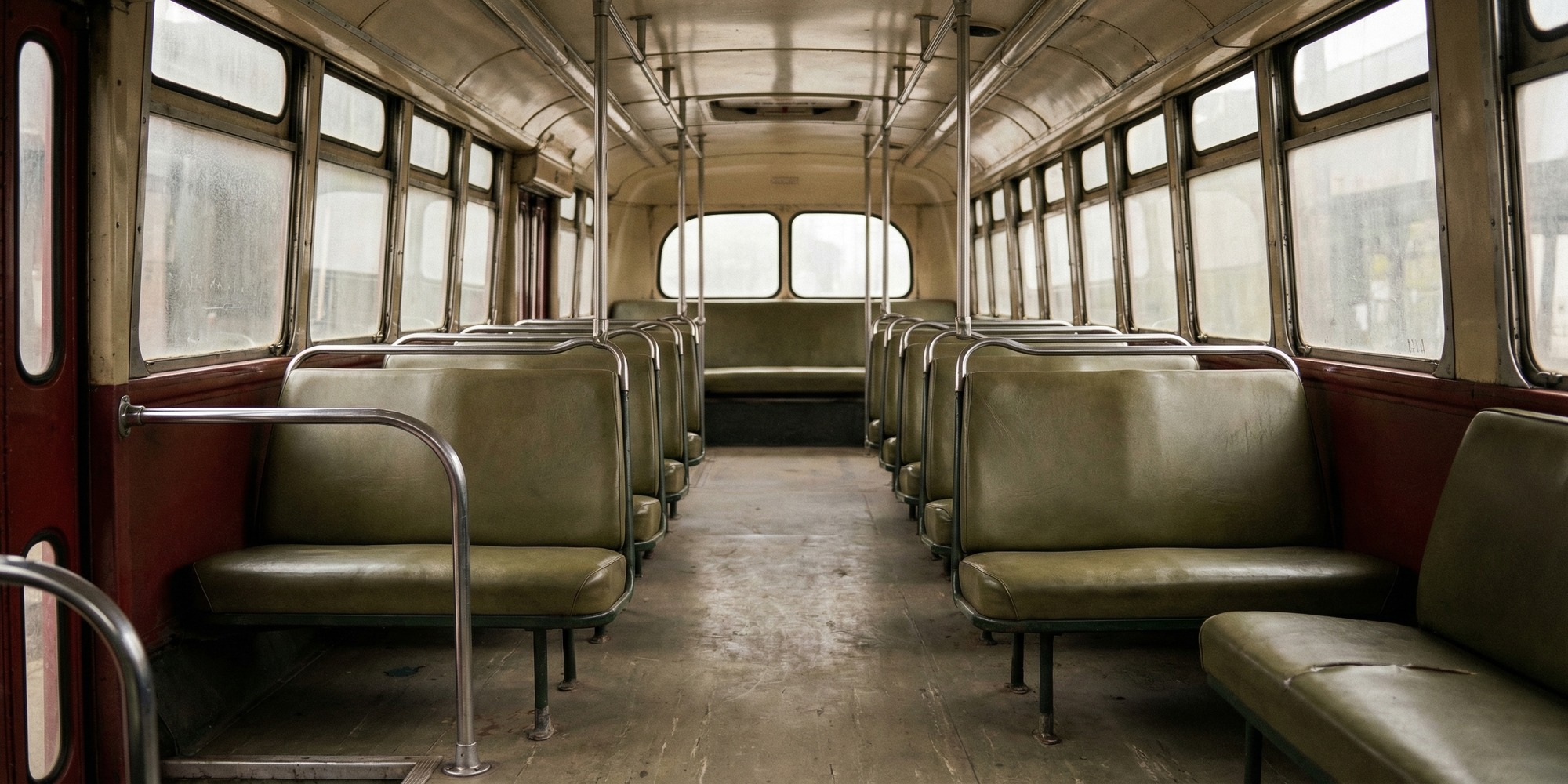
Montgomery Bus Boycott
Rosa Parks's arrest sparks a 381-day boycott that desegregates city buses.
Emmett Till Murdered
The murder of a 14-year-old boy in Mississippi galvanizes the movement.
Little Rock Nine
Nine Black students integrate Little Rock's Central High School.
Greensboro Sit-Ins
Four college students sit at a whites-only lunch counter, sparking sit-ins nationwide.
Freedom Rides
Activists ride interstate buses to challenge segregation in the Deep South.
March on Washington
250,000 people gather to hear Dr. King's "I Have a Dream" speech.
Birmingham Church Bombing
Four young girls are killed in a bombing at 16th Street Baptist Church.
Civil Rights Act
The most sweeping civil rights legislation since Reconstruction.
Freedom Summer
Volunteers register Black voters in Mississippi amid violence.
Selma to Montgomery
Marchers are beaten on "Bloody Sunday," leading to the Voting Rights Act.
Voting Rights Act
Federal law prohibits racial discrimination in voting.
Malcolm X Assassinated
The influential Black nationalist leader is killed in New York.
Black Panther Party Founded
A revolutionary organization advocating Black self-defense and community programs.
Martin Luther King Jr. Assassinated
Dr. King is shot in Memphis on April 4.
Fair Housing Act
Federal law prohibits discrimination in housing.
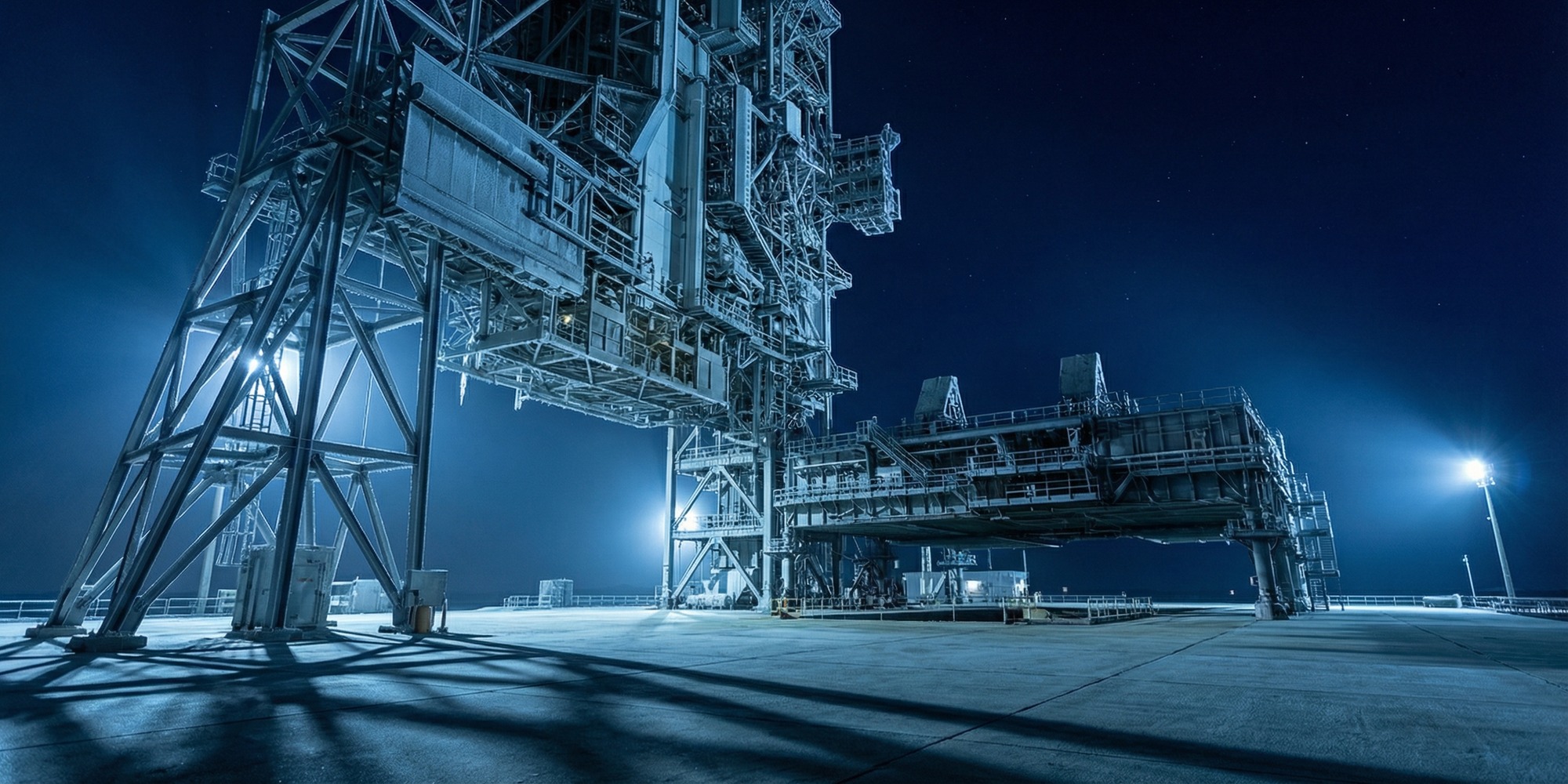
American Bicentennial
The nation celebrates its 200th anniversary.
Iran Hostage Crisis
Iranian revolutionaries seize the U.S. embassy, holding 52 Americans for 444 days.
Three Mile Island
A partial meltdown at a Pennsylvania nuclear plant shakes public confidence.
Reagan Elected
Ronald Reagan wins a landslide victory, launching the conservative revolution.
AIDS Epidemic
The first cases of a mysterious disease are reported in the United States.
Challenger Disaster
The space shuttle Challenger explodes 73 seconds after launch, killing seven.
Iran-Contra Scandal
The Reagan administration is exposed for secretly selling arms to Iran.
Berlin Wall Falls
The iconic symbol of the Cold War is torn down.
Gulf War
A U.S.-led coalition drives Iraqi forces from Kuwait in Operation Desert Storm.
Soviet Union Dissolves
The Cold War ends as the Soviet Union breaks apart.
Oklahoma City Bombing
A domestic terrorist attack kills 168 people.
Clinton Impeachment
President Clinton is impeached by the House but acquitted by the Senate.
Bush v. Gore
The Supreme Court effectively decides the presidential election.
September 11 Attacks
Terrorists hijack four planes, destroying the World Trade Center and attacking the Pentagon.
War in Afghanistan
America invades Afghanistan to topple the Taliban and pursue al-Qaeda.
Iraq War Begins
The U.S. invades Iraq based on disputed intelligence about weapons of mass destruction.
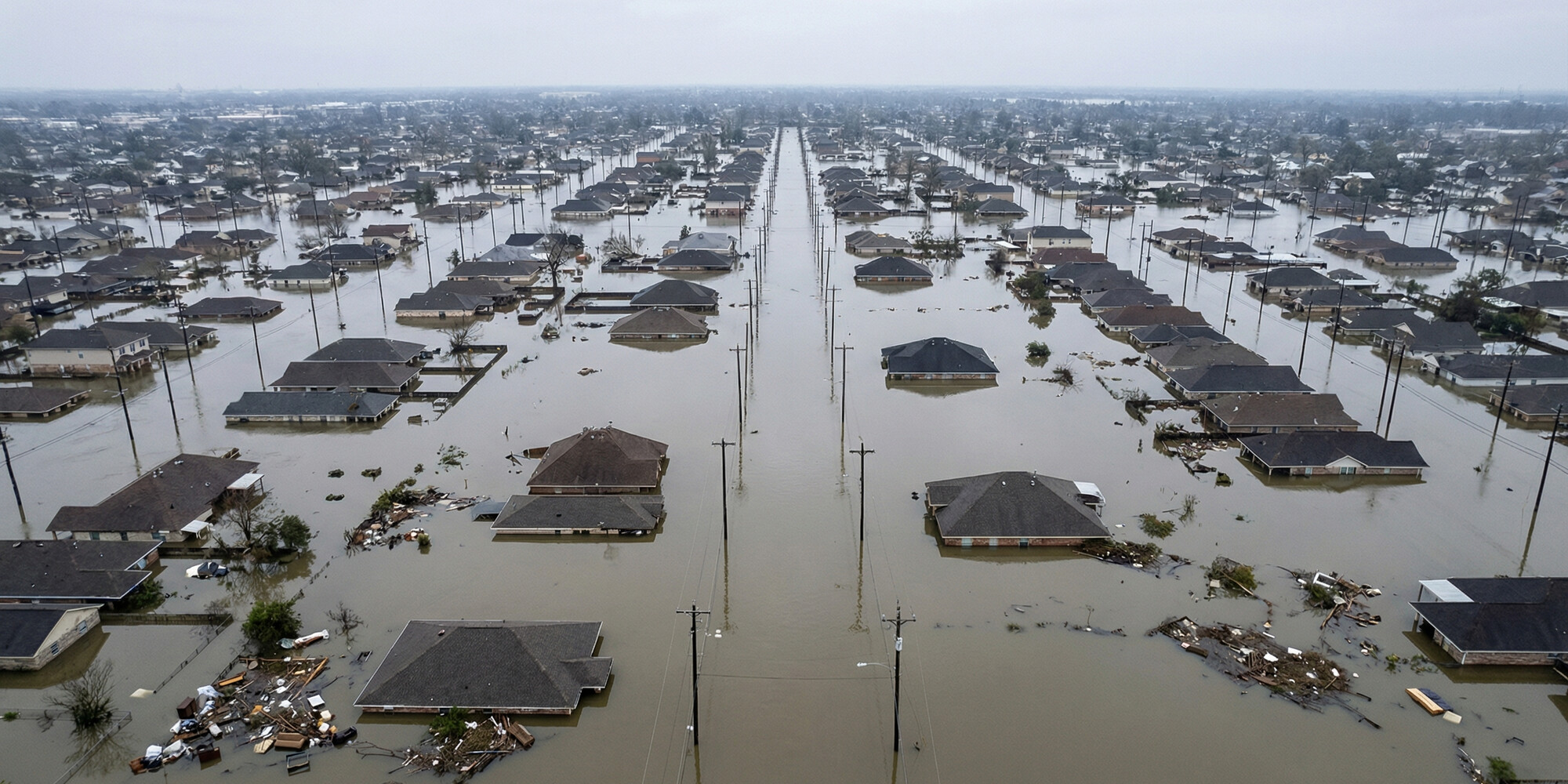
Hurricane Katrina
The catastrophic storm devastates the Gulf Coast and exposes systemic failures.
Financial Crisis
The collapse of Lehman Brothers triggers the worst economic crisis since the Depression.
Obama Elected
Barack Obama becomes the first Black president of the United States.
Affordable Care Act
President Obama signs landmark healthcare reform into law.
Osama bin Laden Killed
U.S. special forces kill the al-Qaeda leader in Pakistan.
Obergefell v. Hodges
The Supreme Court rules that same-sex marriage is a constitutional right.
COVID-19 Pandemic
A global pandemic reshapes American life, killing over one million Americans.
George Floyd Protests
Nationwide protests against police brutality become the largest in U.S. history.
January 6 Capitol Breach
A mob storms the U.S. Capitol in an attempt to overturn the presidential election.
U.S. Withdraws from Afghanistan
America's longest war ends after twenty years.