Pre-Colonial & Indigenous America in brief
North America before 1607 was not empty. People crossed the Bering land bridge around 12,000 BC. Poverty Point went up in what is now Louisiana around 3400 BC. Cahokia, just outside modern St. Louis, held about 20,000 people around 1100 AD. That is bigger than London at the same date. Norse sailors reached Vinland around 1000 AD, and the Haudenosaunee Confederacy formed in the northeast well before Columbus landed in the Caribbean in 1492.
Long before European sails appeared on the Atlantic horizon, the vast landmass that would one day be called America was home to a staggering diversity of peoples and civilizations. For at least twelve thousand years, and likely far longer, human beings had inhabited this continent, shaping its landscapes, developing complex societies, and building cultures of extraordinary richness. From the frozen tundra of the Arctic to the sun-scorched deserts of the Southwest, from the dense forests of the Eastern Woodlands to the sweeping grasslands of the Great Plains, indigenous peoples had created ways of life exquisitely adapted to the land they inhabited.
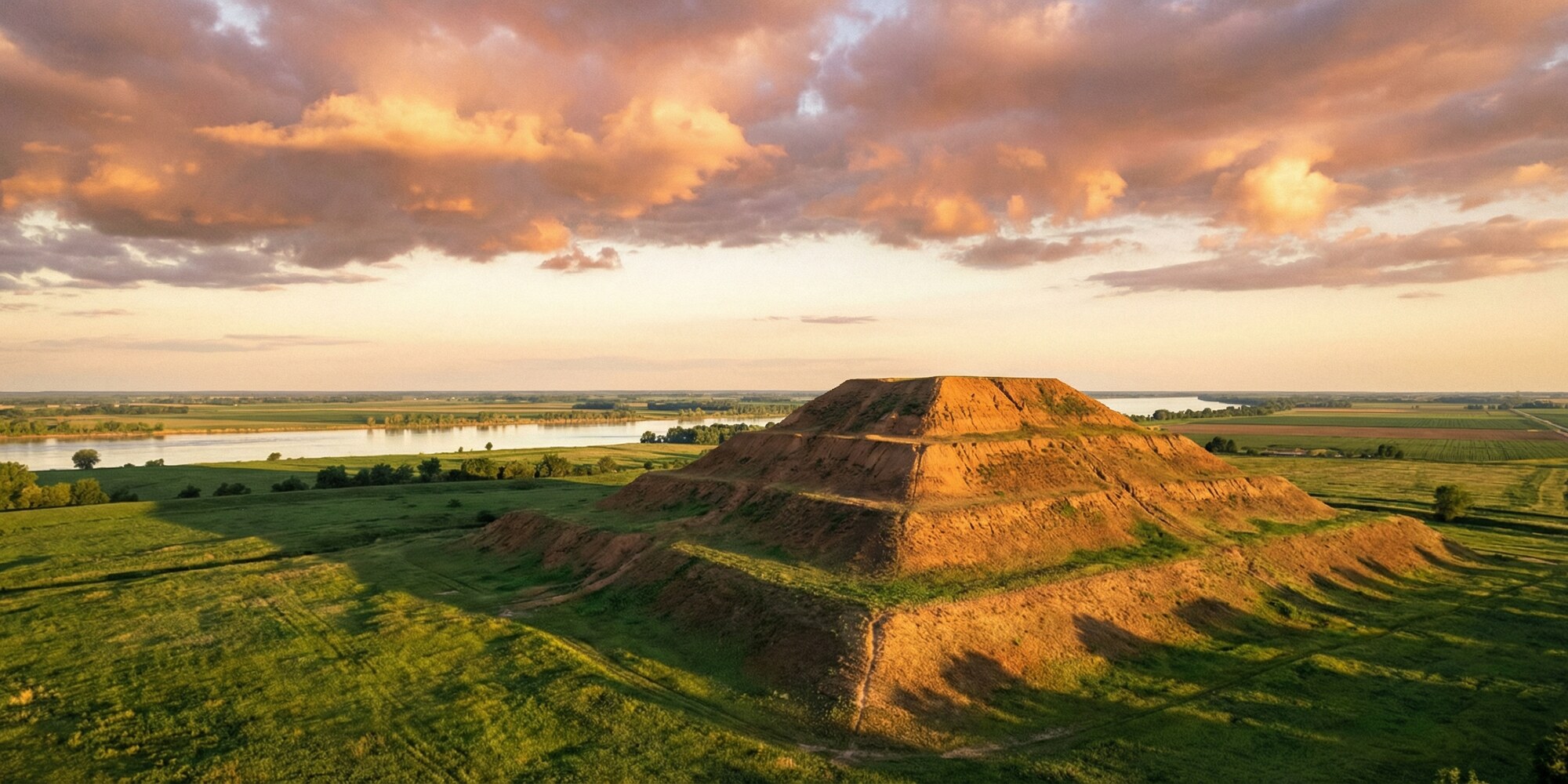
Among the most remarkable of these civilizations was Cahokia, which by 1100 AD had grown into the largest city north of Mexico, its great earthen mounds rising above the Mississippi floodplain near present-day St. Louis. At its zenith, Cahokia's population rivaled that of contemporary London. In the Northeast, the Haudenosaunee, the People of the Longhouse, forged a confederacy uniting five nations under the Great Law of Peace, a sophisticated system of representative governance that would later intrigue the architects of American democracy. In the arid canyons of the Southwest, the Ancestral Puebloans carved elaborate cliff dwellings into sandstone walls and constructed vast ceremonial complexes at Chaco Canyon, engineering roads and astronomical observatories across the desert landscape.
The first recorded European contact came not from the south or east, but from the north. Around 1000 AD, Norse seafarers led by Leif Erikson reached the shores of what they called Vinland, establishing a brief settlement at L'Anse aux Meadows in present-day Newfoundland. But it was Christopher Columbus's 1492 voyage, a venture funded by the Spanish Crown in search of a westward route to Asia, that shattered the isolation of two hemispheres and set in motion the most consequential collision of civilizations in human history. What followed was the Columbian Exchange: an unprecedented transfer of plants, animals, diseases, and ideas between the Old World and the New.
Spanish conquistadors pushed into the continent with relentless ambition. Ponce de León reached Florida in 1513. Hernando de Soto's expedition carved a brutal path through the Southeast from 1539 to 1542, leaving disease and destruction in its wake. In 1565, Spain established St. Augustine in Florida, the oldest continuously occupied European settlement in what would become the United States. By the close of the sixteenth century, the ancient world of indigenous America stood on the threshold of a transformation so vast and violent that its consequences would echo across every century that followed.
Key Events
First peoples cross the Bering land bridge into North America, beginning the human settlement of the continent.
Poverty Point civilization flourishes in present-day Louisiana, constructing massive earthwork complexes and trading across vast distances.
Cahokia rises as the largest pre-Columbian city north of Mexico, its population eventually reaching an estimated 20,000 people.
Norse explorers led by Leif Erikson reach Vinland, establishing the first known European presence in the Americas.
Christopher Columbus reaches the Americas, initiating the Columbian Exchange and permanent European engagement with the New World.
Juan Ponce de León reaches the coast of Florida, claiming it for the Spanish Crown.
Hernando de Soto leads a large expedition through the Southeast, making first European contact with numerous indigenous nations.
St. Augustine is founded in Florida, becoming the oldest continuously occupied European settlement in the present-day United States.
The Roanoke Colony is established on the coast of present-day North Carolina. It will vanish mysteriously by 1590.
Key Figures
The Great Peacemaker, co-founded the Haudenosaunee Confederacy, uniting five nations under the Great Law of Peace and establishing one of the earliest known systems of representative governance in the Americas.
Norse explorer who reached the shores of North America around 1000 AD, nearly five centuries before Columbus, establishing a brief settlement at Vinland.
Genoese explorer whose 1492 voyage across the Atlantic, funded by the Spanish Crown, launched the Columbian Exchange and permanently connected the hemispheres.
Spanish conquistador who conquered the Aztec Empire in 1521, demonstrating the devastating military and biological impact of European contact on indigenous civilizations.
Dominican friar who documented and passionately protested the atrocities committed by Spanish colonizers against indigenous peoples, becoming one of the earliest advocates for human rights in the Americas.
Articles
Before Columbus. Before Jamestown. A city of 20,000 rose from the Mississippi floodplain, larger than medieval London, and built a civilization history nearly forgot.