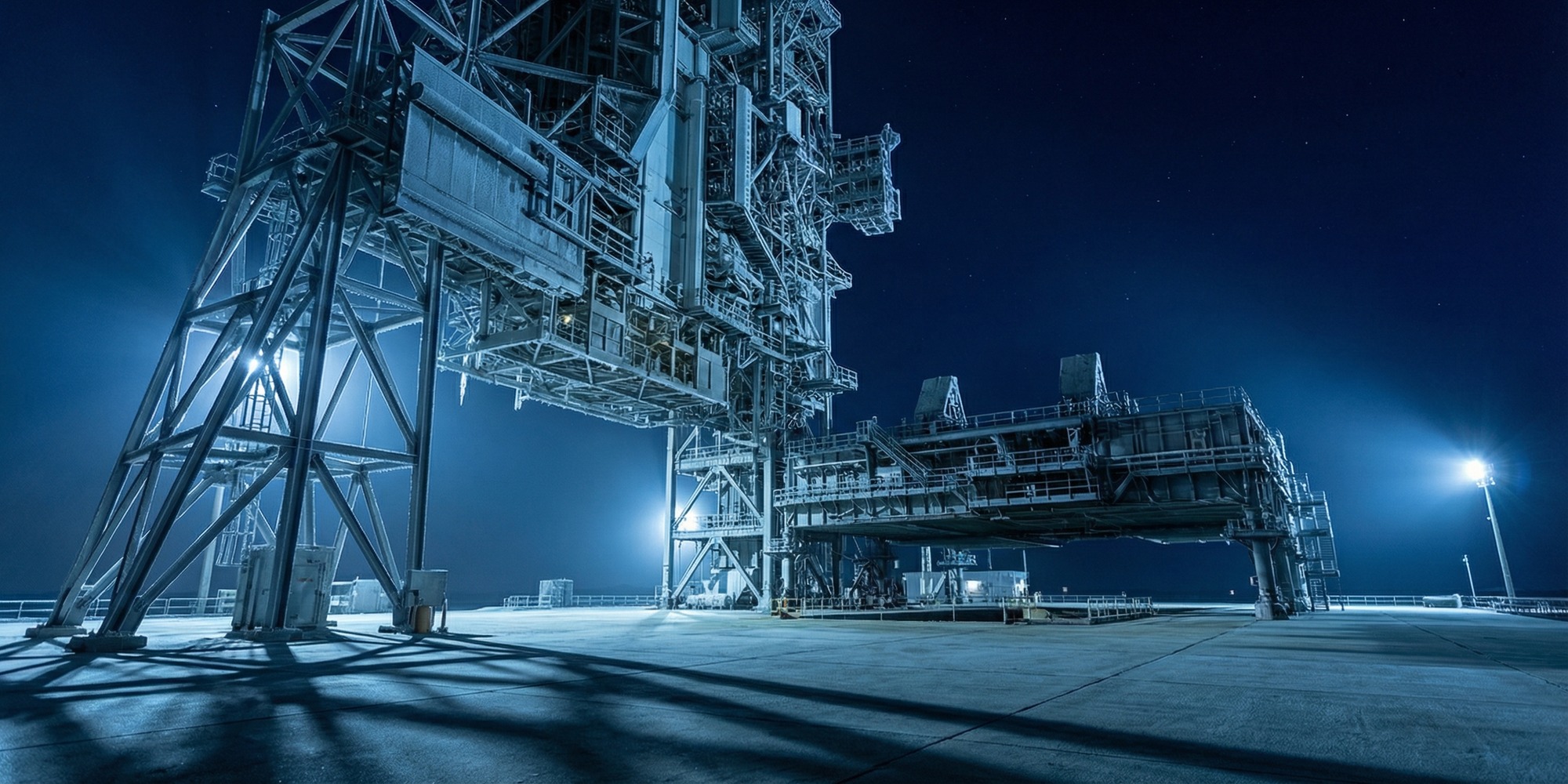
Modern America in brief
Modern America runs 1975 to 2001. Saigon fell in April 1975. Reagan was elected in 1980. Challenger broke apart 73 seconds after liftoff on January 28, 1986, killing all seven astronauts, and the investigation found the problem was how NASA made decisions. The Berlin Wall came down November 9, 1989 and the Soviet Union dissolved in 1991. The Gulf War came that same year. Personal computers and the commercial internet spread through the 1990s.
The post-Vietnam reckoning cut deep into the American psyche. Watergate's aftermath shattered public faith in government, and the fall of Saigon left a generation questioning the nation's moral authority. President Jimmy Carter spoke of a national "malaise," while gas lines and stagflation eroded the postwar economic certainty that Americans had taken for granted. The country seemed adrift, searching for new purpose in a world that no longer offered easy answers.
The Reagan revolution reshaped American conservatism and the economy with sweeping force. Tax cuts, deregulation, and a renewed military buildup defined the 1980s, while the president's sunny optimism offered a counternarrative to the decade's anxieties. The Cold War entered its final, dramatic act, an arms race that strained the Soviet system to its breaking point. When the Berlin Wall fell in November 1989 and the Soviet Union dissolved two years later, the speed of the collapse left the world breathless and America standing as the sole superpower.
Technology began its wholesale transformation of daily life. Personal computers moved from hobbyist garages to office desks to living rooms. Cable news created a twenty-four-hour information cycle. The internet, born in government laboratories and university networks, burst into the mainstream in the 1990s, rewiring commerce, communication, and culture at a pace no one fully anticipated. Silicon Valley became the new engine of American wealth and ambition.
Culture wars intensified over abortion, identity, religion, and values, dividing the electorate along lines that would harden for decades. The Clinton years brought the longest peacetime economic expansion in American history, but also impeachment, partisan warfare, and a contested presidential election in 2000 that laid bare the nation's deepening fractures. For a brief, singular moment between the fall of the Berlin Wall and the fall of the Twin Towers, America stood unchallenged, and uncertain what to do with its power.
Key Events
The nation celebrates its two hundredth birthday with festivities across the country, a moment of unity amid the lingering wounds of Vietnam and Watergate.
Iranian revolutionaries seize the American embassy in Tehran, holding fifty-two hostages for 444 days, while a partial nuclear meltdown in Pennsylvania shakes public confidence in atomic energy.
Ronald Reagan wins a decisive victory over Jimmy Carter, ushering in a conservative revolution that reshapes American politics, economics, and foreign policy for a generation.
The first cases of a mysterious illness emerge among gay men in American cities, beginning a devastating epidemic, while an assassination attempt on President Reagan shocks the nation.
The Space Shuttle Challenger breaks apart seventy-three seconds after launch, killing all seven crew members, while revelations of secret arms sales to Iran rock the Reagan administration.
East Germany opens the Berlin Wall on November 9, triggering jubilant celebrations and signaling the approaching end of the Cold War that had defined global politics for four decades.
A U.S.-led coalition drives Iraqi forces from Kuwait in a swift military campaign, while the Soviet Union formally dissolves, leaving America as the world's sole superpower.
A truck bomb detonates beneath the World Trade Center in the first major terrorist attack on American soil, while the North American Free Trade Agreement reshapes continental commerce.
A domestic terrorist attack destroys the Alfred P. Murrah Federal Building, killing 168 people and revealing the lethal threat of homegrown extremism.
The House of Representatives impeaches President Bill Clinton on charges of perjury and obstruction of justice; the Senate acquits him after a deeply partisan trial.
The presidential election between George W. Bush and Al Gore hangs on disputed Florida ballots for thirty-six days until the Supreme Court effectively decides the outcome.
Key Figures
40th President of the United States
President whose conservative revolution reshaped American politics, championing tax cuts, deregulation, and a muscular foreign policy that hastened the end of the Cold War.
41st President of the United States
President who managed the end of the Cold War and led the coalition that drove Iraqi forces from Kuwait, navigating a world transformed by the Soviet Union's collapse.
42nd President of the United States
President who presided over the longest peacetime economic expansion in American history, balancing the federal budget while navigating impeachment and partisan warfare.
Supreme Court Justice
First woman appointed to the Supreme Court, whose pragmatic jurisprudence and swing-vote influence shaped American law on issues from abortion to affirmative action.
Chairman of the Joint Chiefs of Staff
Chairman of the Joint Chiefs who shaped post-Cold War military strategy, orchestrating the Gulf War and articulating a doctrine of overwhelming force in American interventions.
Entrepreneur & Technology Pioneer
Entrepreneur whose Apple Computer helped launch the personal computing revolution, transforming how Americans work, communicate, and experience technology in daily life.