The Secret Cities and the Fire at Dawn: How the Manhattan Project Built the Atomic Bomb
By Library of History Editorial Staff
By the time the first controlled chain reaction crackled to life under a university football stadium in Chicago in December 1942, the United States had already crossed a threshold. The Manhattan Project was not merely a science program. It was a national mobilization wrapped in secrecy, built across deserts, river valleys, and college towns, and financed at a scale almost no elected official could publicly describe. The weapon it pursued did not exist yet in finished form, but its consequences already shaped policy, diplomacy, and military planning.
Fear gave the program its first velocity. Refugee physicists, aware of German advances in nuclear research, warned that a dictatorship already at war might build an atomic bomb first. After years of uncertainty, Washington moved from study to commitment in 1942, when U.S. entry into World War II transformed theoretical urgency into wartime procurement. The Army Corps of Engineers, under the Manhattan Engineer District, turned abstract equations into contracts, rail schedules, and guarded gates.
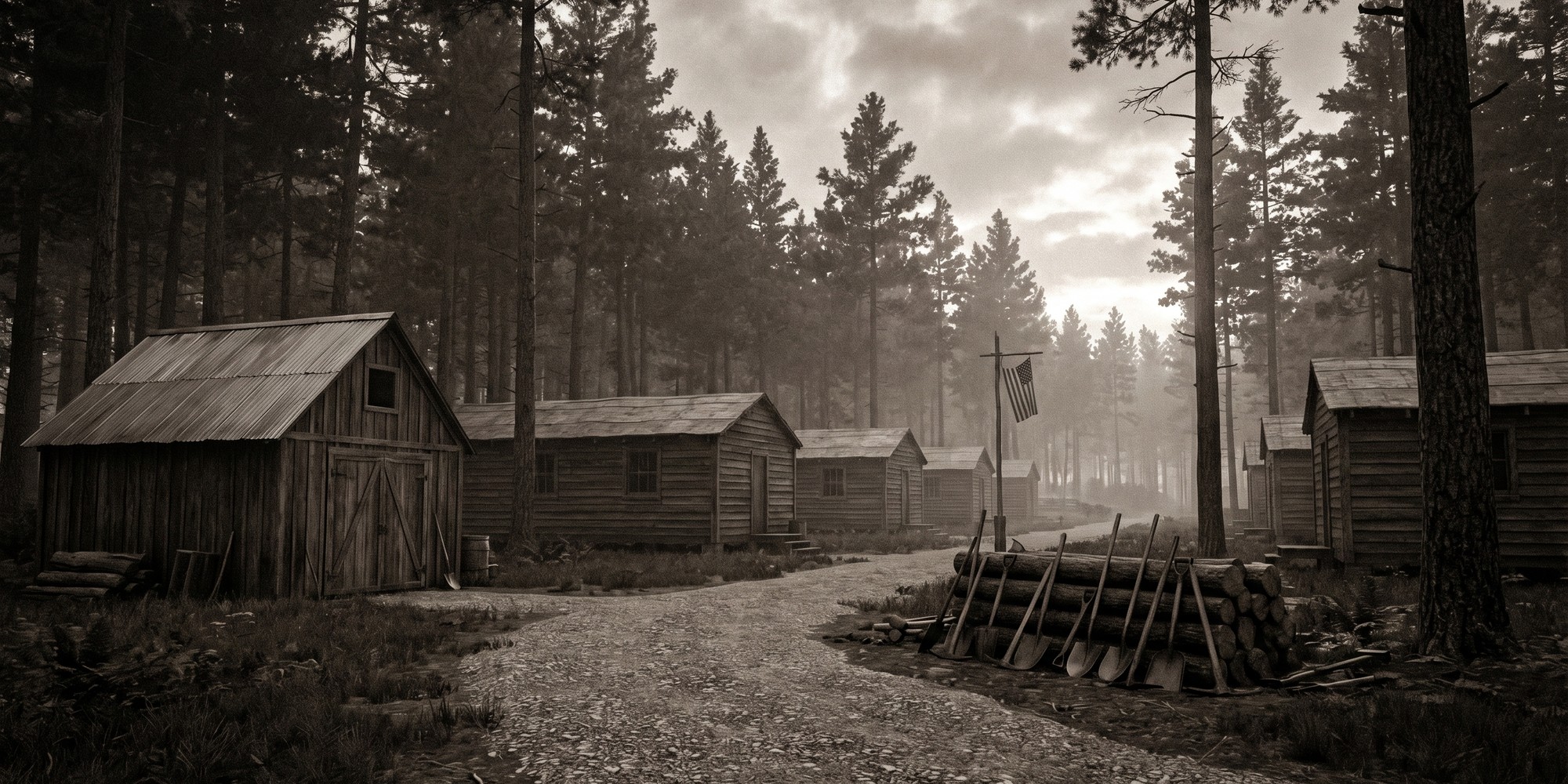
What followed was one of the strangest industrial campaigns in American history. Entire communities appeared where cattle had grazed or orchards had stood. Workers arrived by train and bus to jobs they could not fully explain to spouses. Scientists argued over neutron behavior by day and military command structures by night. Clerks, machinists, janitors, chemists, and soldiers all handled pieces of the same puzzle, most seeing only one corner of the picture. In less than three years, this distributed machine produced enough fissile material to test a device in New Mexico and then to destroy two Japanese cities.
From Warning Letters to Wartime Commitment
The Manhattan Project is often told as a sudden breakthrough story, but its beginning was slower and more uncertain. In 1939, Albert Einstein signed a letter drafted by Leo Szilard and colleagues warning President Franklin Roosevelt that uranium might permit extraordinarily powerful bombs and that Nazi Germany could be investigating the same path. Roosevelt did not launch an immediate crash program. Instead, advisory committees studied feasibility, materials, and laboratory evidence while war spread in Europe.
By 1941 and 1942, the tone changed. British work under the MAUD Committee concluded that an atomic weapon was technically possible in wartime, not just in theory. Pearl Harbor and U.S. entry into the war compressed timelines everywhere. In June 1942, the U.S. Army formally took control of large-scale development, and in September Brigadier General Leslie R. Groves was appointed to direct the project. Groves brought logistical aggression that matched the military moment. He selected sites, accelerated construction, and imposed compartmentalization rules that treated information itself as a strategic asset.
The project’s structure quickly spread across specialized hubs. Oak Ridge, Tennessee, focused on uranium enrichment using multiple methods because no single approach was guaranteed to succeed. Hanford, Washington, built reactors and chemical plants to produce plutonium. Los Alamos, New Mexico, gathered theoretical and experimental teams to design, integrate, and weaponize final devices. Smaller laboratories and contractors fed each center with metallurgy, explosives, instrumentation, and transport capacity. The map looked decentralized, but command remained tightly held.
Secrecy shaped the human experience from the start. Many workers used mailing addresses that referenced only post office boxes. Badges, checkpoints, and censors governed daily life. Even senior personnel operated with partial knowledge unless their role demanded otherwise. This system limited leaks, but it also created a moral distance between labor and outcome. Tens of thousands helped build the bomb without knowing when, where, or how it would be used.
Building the Secret Cities: Oak Ridge, Hanford, and Los Alamos
No part of the Manhattan Project was small, but the speed of construction was astonishing even by wartime standards. Oak Ridge rose in eastern Tennessee as both factory complex and controlled town. The federal government acquired large tracts of land, displacing residents through eminent domain, then filled the site with huge plants dedicated to separating uranium isotopes. Because engineers were uncertain which enrichment pathway would scale best, they pursued several at once: electromagnetic separation, gaseous diffusion, and thermal diffusion. The redundancy cost money, but wartime planners valued certainty over elegance.
Hanford confronted a different challenge, producing plutonium in reactors that required massive water and power resources. The Columbia River made the site viable, while distance from population centers appealed to military risk calculations. Reactors, separation canyons, rail links, and worker housing arrived in a blur of concrete and steel. Technical setbacks were frequent. Radiation controls were primitive by modern standards, and many safety practices evolved through trial, incident, and rapid revision. Still, by 1945 Hanford had generated plutonium suitable for weapons use.
Los Alamos, perched on a New Mexico mesa, was where theory had to become hardware. J. Robert Oppenheimer directed a laboratory culture that was intellectually intense and structurally chaotic, part graduate seminar and part ordnance shop. Teams wrestled with fast-neutron calculations, tamper design, implosion geometry, diagnostics, and firing systems. The gun-type uranium design looked comparatively straightforward. The plutonium path became far harder when reactor-produced material proved vulnerable to predetonation in gun assembly, forcing a pivot to a technically demanding implosion device.
These cities were not populated only by famous physicists. They depended on electricians, pipefitters, typists, military police, bus drivers, nurses, cooks, and machinists. Women served in laboratories, drafting rooms, clerical offices, and technical support roles, though advancement and recognition remained uneven. Black workers were present in project labor forces, especially in construction and service roles, but they navigated segregation and discrimination shaped by wider American practice during the war. The bomb was built by a broad workforce in a stratified society.
By 1944 and early 1945, the project had become a vast production organism. Procurement officers tracked copper, silver, graphite, and precision tools with the same urgency as generals tracked divisions overseas. Rail traffic moved components under guard. Laboratories exchanged coded reports. When one pathway stalled, another surged. The question was no longer whether an atomic device could be built, but whether it could be assembled in time to affect the war.
Trinity: The Test That Changed Strategic Time
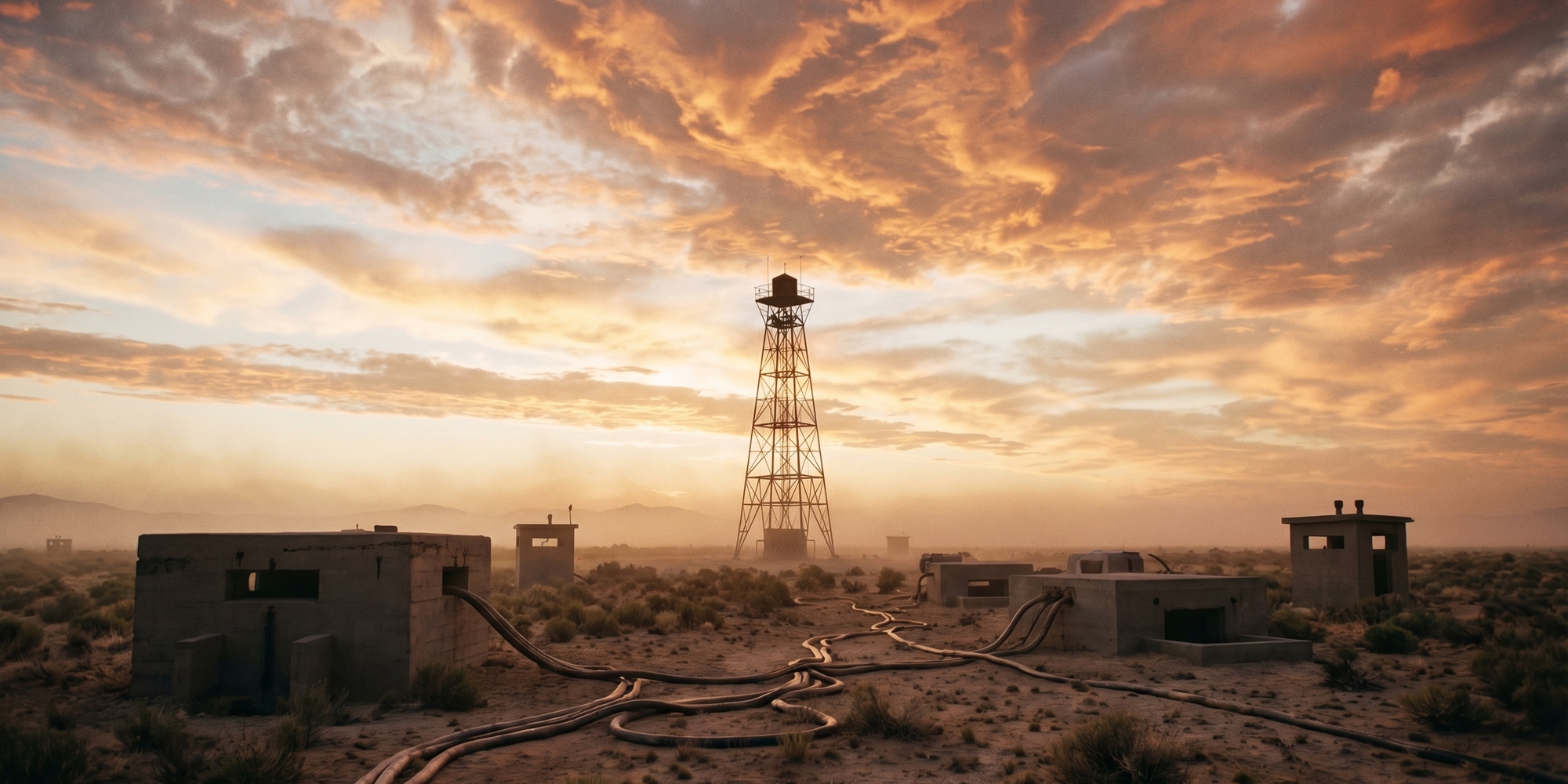
At 5:29 a.m. on July 16, 1945, in the Jornada del Muerto desert of New Mexico, the Manhattan Project crossed from calculation to irreversible reality. The Trinity device, an implosion-type plutonium bomb mounted atop a steel tower, detonated with a blast equivalent to roughly 21 kilotons of TNT, according to later Department of Energy historical summaries. Light and heat arrived first, then a shock wave that rolled across observation points where military officers, scientists, and technicians waited through storms and tense delays.
The test answered technical questions that had divided the laboratory for months. Could explosive lenses compress a plutonium core symmetrically enough to sustain supercritical reaction? Would timing circuits and detonators fire as designed? Would yield justify combat planning already underway? Trinity’s success settled those arguments in minutes. It also transformed strategic timing at the highest political level. President Harry Truman, meeting Allied leaders at Potsdam, received confirmation that the United States possessed a functioning atomic weapon before negotiations with Japan concluded.
Even in triumph, uncertainty remained. Blast estimates varied in the moment. Instrumentation plans had mixed results. Some witnesses described awe, others dread, and many both at once. Oppenheimer later associated the event with language from the Bhagavad Gita, though recollections evolved over decades and should be read with care. What is clear in contemporary records is that Trinity accelerated decision-making. The possibility of demonstration, continued blockade, invasion, Soviet entry into the Pacific war, and atomic use in combat all sat in the same policy window during late July and early August 1945.
The bombs used against Hiroshima (August 6) and Nagasaki (August 9) were not identical designs, and Trinity had tested only the plutonium implosion concept. Yet the New Mexico blast gave military and political leaders confidence that at least one complex design worked under real conditions. Japan announced its intention to surrender on August 15, with formal surrender documents signed on September 2, 1945. Historians continue to debate relative causal weight among atomic bombings, Soviet intervention, and Japan’s internal political dynamics. That debate is vital, and unresolved questions remain central to responsible historical interpretation.
After the Flash: Power, Ethics, and the Architecture of the Atomic Age
The Manhattan Project ended as an emergency program, but it left behind permanent institutions and permanent dilemmas. In 1946, the Atomic Energy Act transferred control from the Army to civilian authority through the U.S. Atomic Energy Commission, signaling that atomic policy would become a long-term feature of governance rather than a temporary wartime exception. Laboratories founded or expanded during the project evolved into enduring centers of weapons design, reactor research, and later civilian nuclear development.
The ethical questions appeared immediately and never disappeared. Some Manhattan Project scientists argued for international controls before a global arms race hardened. The Franck Report warned that surprise use could damage U.S. moral standing and trigger competitive proliferation. Others, confronting casualty projections for invasion and the brutal record of total war in Asia and Europe, supported immediate use as a means to force rapid surrender. These arguments did not produce consensus in 1945, and they still do not.
The project also altered the relationship between American science and the state. Federal funding at unprecedented scale, close integration between laboratories and military planners, and secrecy regimes tied to national security became normalized features of postwar research policy. The model enabled major breakthroughs, but it also concentrated authority in classified systems with limited public oversight. The same institutional habits would later shape missile programs, intelligence technologies, and Cold War strategic doctrine.
For local communities near major project sites, the legacy included both employment and environmental burden. Production urgency outran modern standards of waste management, exposing workers and landscapes to risks that later remediation efforts sought to address. Archival releases and oral histories have widened understanding of those consequences, especially for downwind populations and workers whose exposure records were incomplete. The war ended, but the material footprint did not.
Conclusion
The Manhattan Project was born from fear, executed through industrial improvisation, and completed in a race against a global war. It drew on brilliant theory, blunt bureaucracy, and a labor force far larger than the familiar roster of famous names. Its engineers built factories that looked like cities and cities that functioned like sealed machines. Its scientists solved problems that had seemed impossible only a few years earlier. Its commanders treated time itself as the enemy.
When Trinity lit the New Mexico desert, the United States proved it could weaponize the atom. It also proved that modern states could combine science, secrecy, and production at extraordinary speed, then carry those capacities into peacetime governance. That institutional legacy is as historically important as the explosion itself. The Manhattan Project did not only help end World War II. It opened the atomic age, where military power, diplomacy, and human survival became permanently linked to technologies first assembled in America’s secret cities.