"The Dear Old Flag Never Touched the Ground": The 54th Massachusetts and the Assault on Fort Wagner
By Library of History Editorial Staff
The sun was already sinking toward the Atlantic when Colonel Robert Gould Shaw rode to the head of his regiment on the evening of July 18, 1863. Behind him, six hundred men of the 54th Massachusetts Volunteer Infantry stood in formation on the narrow sands of Morris Island, South Carolina, a corridor of beach barely a hundred yards wide, hemmed between the ocean and a saltwater marsh. Ahead of them, a quarter mile distant, rose the shadowed bulk of Confederate Fort Wagner: thirty feet of compacted sand and timber, bristling with cannon embrasures, garrisoned by seventeen hundred soldiers who had spent months preparing for exactly this kind of attack.
Shaw was twenty-five years old. His regiment was composed entirely of Black men, many of them formerly enslaved, fighting in a war they hoped would settle, once and for all, the question of whether they were citizens of the nation that had kept them in chains. They had been recruited with a singular argument, that Black men would fight, and they were about to prove it at catastrophic cost. Shaw drew a cigar from his coat, lit it calmly, and turned to his men. "Move in quick time," he told them, "until within a hundred yards of the fort, then double-quick and charge." He paused. "I want you to prove yourselves."
What followed in the next hour would become one of the defining moments of the Civil War, a military failure that nonetheless transformed the arc of American history.
"Men of Color, to Arms!", Building the 54th
The story of the 54th Massachusetts begins not on a battlefield but in the offices of Massachusetts Governor John A. Andrew, one of the most ardent abolitionists in American politics. When Secretary of War Edwin Stanton authorized the recruitment of African American troops on January 26, 1863, weeks after Lincoln's Emancipation Proclamation had formally opened the door, Andrew moved immediately. He recruited Frederick Douglass, the nation's most prominent Black abolitionist, to spread the word. Douglass threw himself into the task with the passion of a man who had escaped slavery himself, traveling across the North and delivering rousing speeches that framed enlistment not merely as military service but as the decisive act in the struggle for Black citizenship. Two of the first men he enrolled were his own sons, Lewis and Charles Douglass.
For the regiment's commanding officer, Andrew chose carefully. He wanted a young man from an unimpeachable abolitionist family, someone whose appointment would signal to both the army and the public that the 54th was not an experiment but a statement. He settled on Robert Gould Shaw, the twenty-five-year-old son of prominent Boston abolitionists who had grown up in the orbit of William Lloyd Garrison. Shaw had already served two years in the war with the 2nd Massachusetts Infantry, seen action at Cedar Mountain and Antietam, and earned a reputation for courage and steadiness. He initially declined the command, confessing in a letter to his father that he doubted his own fitness for the responsibility. Then he changed his mind. Perhaps he recognized, as his father suggested, that there are moments in history when a man of conscience cannot afford to stand aside.
The regiment trained through a bitter winter at Camp Meigs in Readville, Massachusetts, and was mustered into federal service on May 13, 1863. The men were educated, motivated, and burning with a sense of purpose that set them apart from many of their white counterparts. They were also fighting an insult before they ever reached the front. The federal government was paying Black soldiers ten dollars a month, three dollars less than white soldiers received, with an additional deduction for clothing. The 54th, in a collective act of dignity that astonished the army establishment, refused to accept any pay at all until Congress equalized wages. They went without pay for eighteen months. Congress finally relented in June 1864.
In late May, the regiment shipped south to the Sea Islands of South Carolina, where they joined Union forces attempting to tighten the blockade of Charleston. Their introduction to combat came on July 16, at the Battle of Grimball's Landing, when approximately 250 men of the 54th held off an attacking Confederate force of some 900 soldiers. Their first engagement, and a convincing one. Two days later, they were handed a task that would have tested any regiment in the Union Army.
The Fortress of Sand, Fort Wagner and the Price of Charleston
Confederate Fort Wagner sat at the southern tip of Morris Island, a sand spit that controlled the main ship channel into Charleston Harbor. Take Morris Island, reduce Fort Sumter, and Charleston itself might fall, ending the war's most symbolically charged standoff, the one that had begun in April 1861 when Confederate guns first fired on the federal garrison. General Quincy Adams Gillmore had been pursuing this strategy since landing Union forces on the island on July 10, when a hastily mounted assault on Fort Wagner had been beaten back with 330 Union casualties against fewer than a dozen Confederate losses.
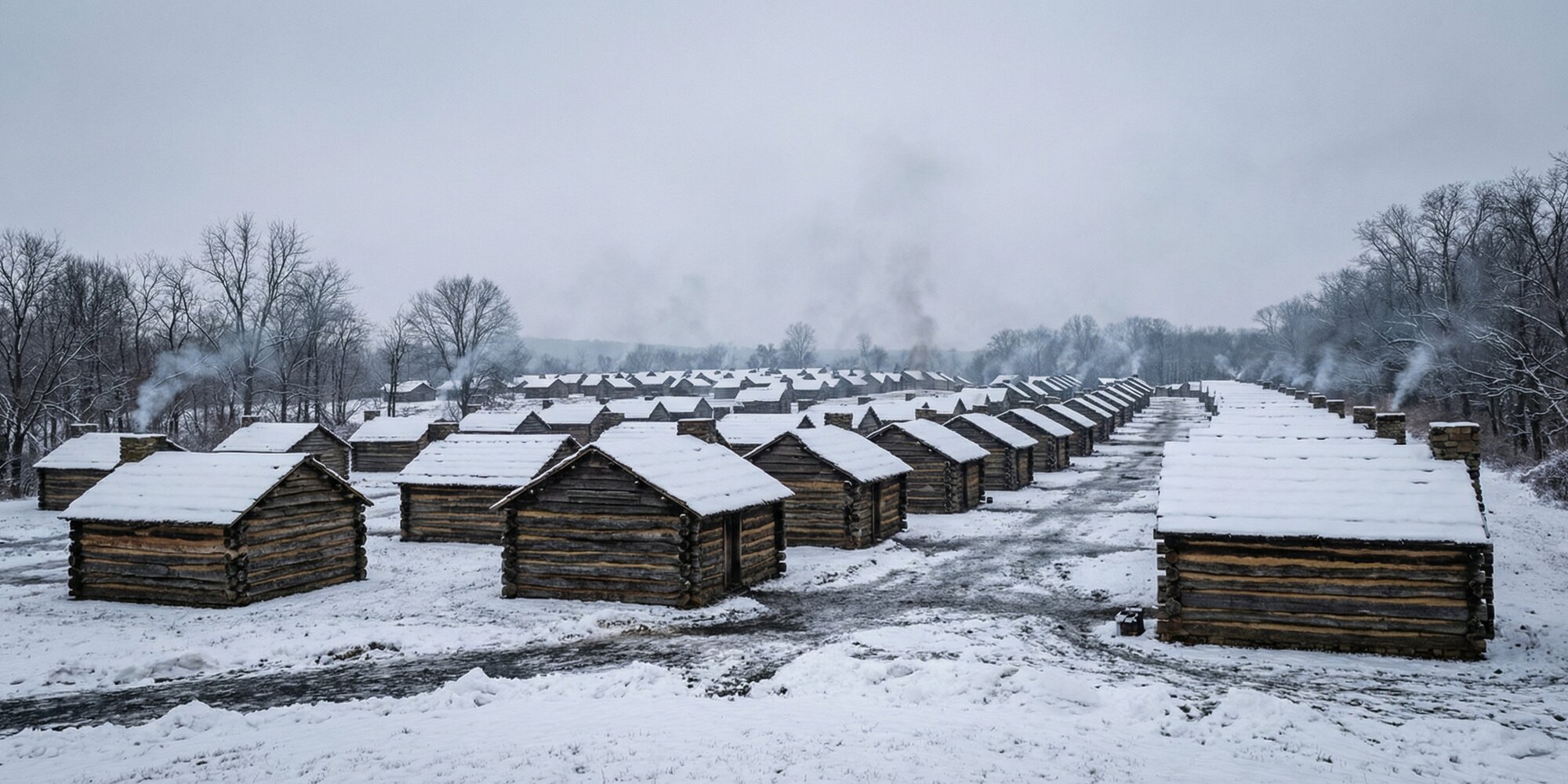
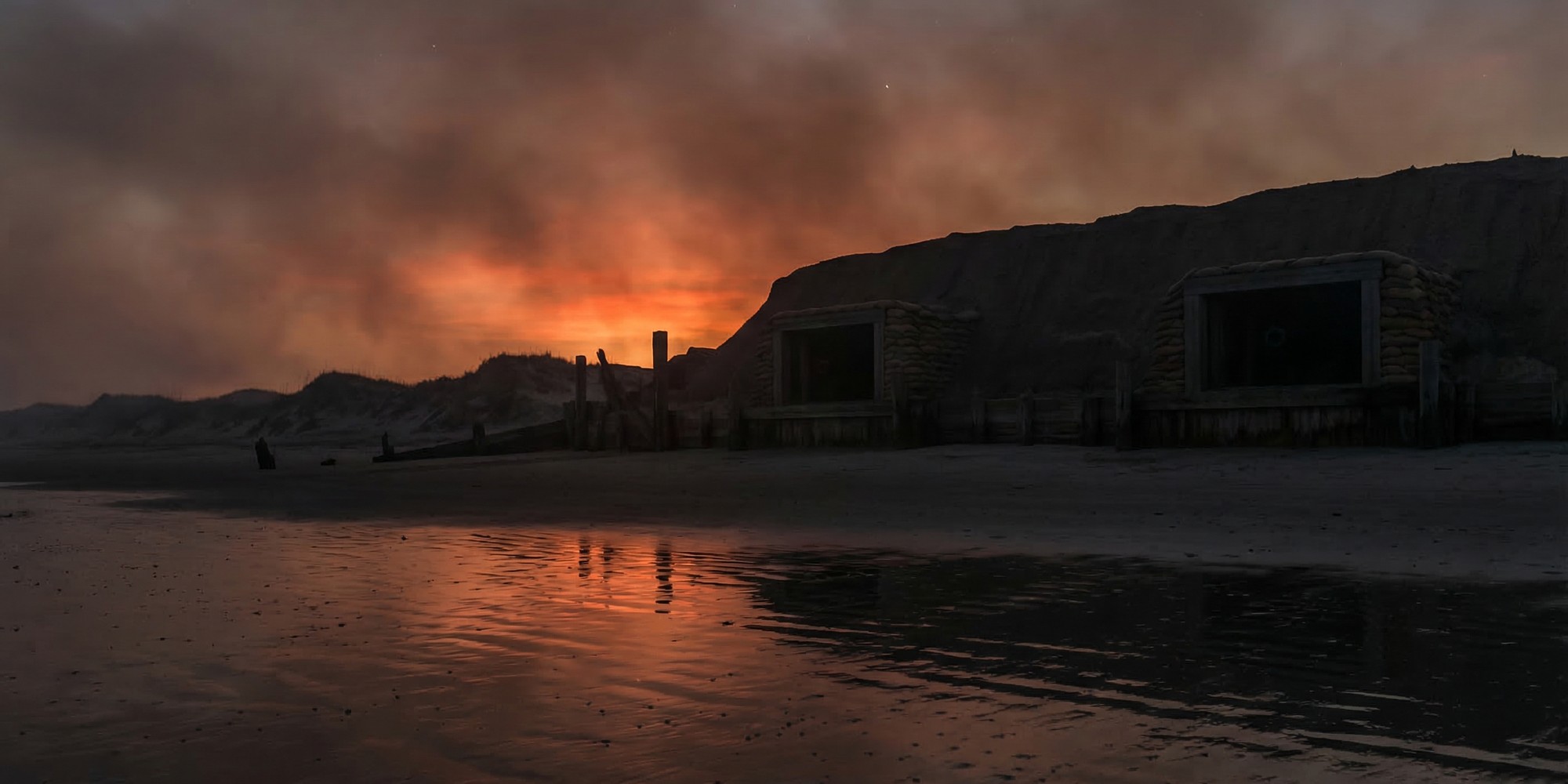
The fort was a masterpiece of defensive engineering. Its walls were not brick and mortar but compressed sand, a material that absorbed artillery rounds rather than shattering under them. The parapets stood thirty feet high. A water-filled moat ran across the land approach. The approach itself was a killing ground: a strip of beach barely wide enough for a regiment to advance in column, flanked on one side by the Atlantic surf and on the other by an impassable marsh. Any attacking force would have to march the length of it in plain view, absorbing fire the entire way.
On July 18, Gillmore attempted to neutralize the fort with bombardment before sending in the infantry. Union warships and land batteries fired approximately 9,000 shells at Fort Wagner over eleven hours, an enormous expenditure that left officers optimistic they had suppressed the garrison. They had not. The Confederate defenders sheltered in bombproof bunkers built deep into the sand, absorbing the barrage, and emerged at dusk to find their guns intact and their walls largely undamaged.
Gillmore assigned the assault to Brigadier General Truman Seymour. And Seymour, whether out of a calculating desire to test the Black regiment under fire or a genuine recognition of their ability, placed the 54th Massachusetts at the head of the column. Shaw accepted the honor without hesitation. Behind his regiment, five thousand more Union soldiers, white regiments, would follow.
"Forward, 54th!", The Charge Across the Sand
At dusk, Shaw led his men forward. The advance began at a walk, "move in quick time", across the 1,200 yards of open beach separating them from the fort. Confederate defenders opened fire with rifles and artillery almost immediately. The regiment absorbed casualties as it came on, maintaining its formation, closing toward the looming dark mass of sand and timber ahead.
At a hundred yards, Shaw gave the order to charge. The 54th broke into a run, screaming, closing the distance as Confederate fire intensified. The regiment reached the outer ditch, crossed it, and began to scale the thirty-foot parapet. Shaw made it to the top, sword raised, shouting "Forward, 54th!" He was struck by multiple rifle balls and killed before he reached the other side.
But the regiment did not stop. Roughly half the men scaled the parapet and fought their way onto the ramparts, holding their position for approximately one hour in some of the most savage close-quarters combat of the entire war, grappling with Confederate defenders in the darkness, fighting with bayonets and rifle butts across the sand walls of a fort that refused to fall. The supporting Union regiments that were supposed to follow them in either faltered under the withering fire or arrived too late to consolidate the beachhead.
In that terrible darkness, one man's story would become the regiment's immortal symbol. Sergeant William H. Carney had been born into slavery in Norfolk, Virginia, on February 29, 1840, and had escaped to freedom via the Underground Railroad before the war. When the regiment's color bearer was shot down, Carney seized the national flag and carried it forward, up the parapet, fighting to the top even as bullets tore through him, striking his chest, his right arm, his thigh, both legs. He planted the flag at the crest and held it there as the assault collapsed around him. When the regiment was finally forced to withdraw, Carney staggered back down the beach, clutching the flag to his chest, bleeding from multiple wounds. He reached the Union lines and handed it to a fellow soldier. "Boys," he said, "I did but my duty; the dear old flag never touched the ground."
The assault had failed. Of the approximately 600 men of the 54th who charged that evening, 272 were killed, wounded, or captured, a casualty rate of more than 45 percent. Colonel Shaw was dead, buried by Confederate General Johnson Hagood in a mass grave with his men, an act intended as an insult, to deny Shaw the individual burial afforded to white officers. When news reached Shaw's father in Boston, he reportedly said that he could wish his son no better burial. Fort Wagner would not fall until September, when Confederate forces abandoned it.
What the Charge Proved, and What It Cost
The newspapers, which had questioned from the beginning whether Black men would fight, had their answer. Northern publications that had been skeptical or hostile to Black military service were stunned by what the 54th had done. The Atlantic Monthly, Harper's Weekly, and papers across the North covered the assault in detail, focusing on the bravery of Shaw and the regiment. Frederick Douglass, who had spent months arguing that Black soldiers would transform both the war and the nation's understanding of citizenship, had been vindicated in the most dramatic terms imaginable.
His prophecy, issued the previous year, rang with new authority: "Once let the black man get upon his person the brass letters U.S., let him get an eagle on his button, and a musket on his shoulder and bullets in his pockets, and there is no power on earth which can deny that he has earned the right of citizenship in the United States."
The practical consequences were enormous. In the months following the assault on Fort Wagner, the recruitment of Black soldiers accelerated dramatically. By the war's end, approximately 180,000 African Americans had served in the Union Army, roughly 10 percent of its total strength, and around 40,000 had died, from battle, disease, and the conditions of a war that often treated Black prisoners more harshly than white ones. Confederate policy, in fact, was to execute captured Black soldiers as slave insurrectionists rather than treat them as prisoners of war, a policy that Grant eventually suspended prisoner exchanges to protest.
The 54th Massachusetts itself continued to fight. They saw action at Olustee, Florida, in February 1864, and at Honey Hill, South Carolina, in November of that year. Sergeant Carney survived his wounds. In 1900, thirty-seven years after Fort Wagner, he received the Medal of Honor, one of the first African Americans awarded the nation's highest military decoration. When he died on December 11, 1908, the flags of the Massachusetts State House flew at half-staff.
In 1897, sculptor Augustus Saint-Gaudens unveiled his bronze memorial to Robert Gould Shaw and the 54th Massachusetts Infantry on Boston Common, facing the State House. The memorial (showing Shaw on horseback leading his men forward, the regiment's faces carved with fierce individuality and purpose) is considered one of the finest pieces of public sculpture in America. The poet Robert Lowell, writing in 1960 during another era of struggle over Black citizenship, called it "out of bounds now," its bronze soldiers "a lost war's votary."
The charge across the sands of Morris Island is remembered as a military defeat. But its significance was never really military. It was an argument, made in blood, about who belonged to America and what they were willing to sacrifice for the right to be called its citizens. The men of the 54th Massachusetts had answered Frederick Douglass's call. They had climbed the parapet, planted the flag, and fallen back only when there was no choice. And even then, the flag had not touched the ground.
A Promise Extended, and Then Deferred
The sacrifice of the 54th Massachusetts belongs to a larger arc that would define the Civil War era. The war's end in April 1865 brought the 13th Amendment, which abolished slavery throughout the United States. The 14th Amendment, ratified in 1868, extended citizenship and equal protection to all persons born on American soil, the constitutional answer to the Dred Scott decision and the legal foundation for everything the 54th had fought for. The 15th Amendment, ratified in 1870, prohibited denying the right to vote based on race.
For a brief, extraordinary decade, these amendments were enforced. Black men served in Congress, in state legislatures, as sheriffs and judges across the South. Schools opened. Communities were built. It was, by any measure, a revolution.
But the revolution was not completed. The Compromise of 1877 ended Reconstruction and withdrew the federal troops who had kept its promise. What followed was nearly a century of Jim Crow segregation, disenfranchisement, and racial terror, a long, bitter re-litigation of the question the men of the 54th Massachusetts had answered on the sands of Morris Island in July 1863.
The argument they made that night was never refuted. It was simply ignored, for a very long time, by a nation not yet ready to honor it. Understanding that gap (between what was proven and what was accepted, between the right that was earned and the citizenship that was denied) is essential to understanding not just the Civil War era, but the full meaning of American history.